Details
- Start Date: June 2021
- Phase: Phase 2
- Study Type: Interventional
- Duration: 7 Visits
- Insurance: No insurance is needed
- Benefits: Compensation up to $1,500 for time and travel

COVID-19 clinical trials in Tampa test new treatments and vaccines with the help of volunteer participants. By joining a COVID-19 clinical trial, you'll receive expert health care, financial compensation, and contribute to global health research.
Located in Tampa, FL - Santos Research Center is enrolling participants now.
Enroll Now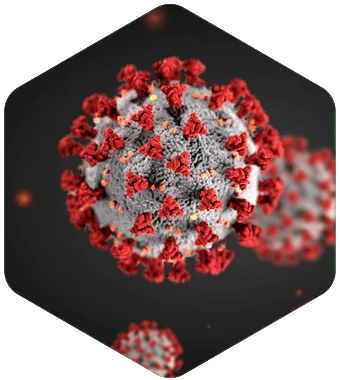
Efforts are underway worldwide to continue developing safe and innovative treatments and vaccines to protect people against the virus that causes COVID-19.
Purpose: Evaluating an investigational treatment for individuals recently diagnosed with COVID-19 to reduce symptoms and prevent severe complications.
Study-related phone and in-clinic visits with Physician at no cost
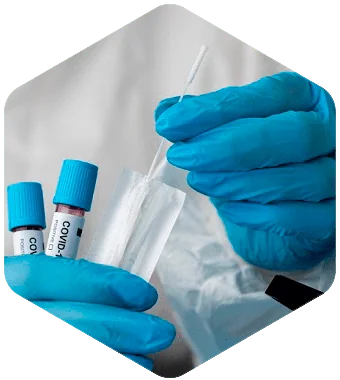
The treatments available today were made possible through the dedicated efforts of thousands of professionals and participants who have joined clinical trials.
Purpose: Investigating treatments for COVID-19 symptom rebound after completing a 5-day course of nirmatrelvir / ritonavir (Paxlovid).
Study-related phone and in-clinic visits with Physician at no cost
Call today to learn more about joining a paid clinical trial in Tampa!

Quick health assessment to determine eligibility.
Receive investigational medication under expert care.
Monitor symptoms and ensure safety.

Ready to get started? Contact us at (813) 249-9100 or email info@santosresearch.com to begin your pre-screening.
COVID-19 clinical trials in Tampa are led by Santos Research Center, a trusted medical research facility committed to advancing medicine. Participants choose us because:
Join a clinical trial today to make a difference in COVID-19 research.

Help advance COVID-19 treatment research while receiving expert medical care and compensation. Clinical trials play a vital role in developing new antiviral medications, monoclonal antibodies, and vaccines to improve global health.
Your participation supports FDA-approved research and ensures new treatments are safe and effective.
Enroll NowA COVID-19 clinical trial is a type of medical research designed to test the safety, efficacy, and potential side effects of new medications, therapies, or vaccines for COVID-19. These studies are conducted under strict protocols and guidelines set by the Food and Drug Administration (FDA) and Institutional Review Boards (IRBs) to protect patient health.
COVID-19 trials may involve testing small molecule treatments, monoclonal antibody therapies, protease inhibitors, or new vaccines developed by pharmaceutical companies such as Moderna. Some studies also evaluate expanded access programs for patients who do not qualify for standard trials.
For more details, read our guide to clinical trial phases.
A randomized controlled trial (RCT) is a clinical research method used to test new treatments fairly. Participants are randomly placed into one of two groups: one receives the investigational drug, vaccine, or therapy, while the other receives a placebo, an inactive substance with no medical effect.
This process helps scientists compare results and see if the treatment really works. Many COVID-19 trials, including those testing new antiviral drugs and monoclonal antibodies, use RCTs to measure effectiveness while avoiding bias.
A principal investigator (PI) is the lead physician or scientist responsible for overseeing a clinical trial. They ensure that the study follows the approved protocol, safety guidelines, and FDA regulations. The research team works under the PI's supervision to monitor participants, collect data, and track safety.
Yes. All COVID-19 trials at Santos Research Center follow strict Food and Drug Administration, National Institutes of Health, and Institutional Review Board regulations to protect participant safety.
Participants undergo routine health screenings and medical monitoring to track any side effects.
Common safety measures include regular check-ups with physicians, continuous health assessments, and immediate medical attention if complications arise.
COVID-19 trials test antivirals, vaccines, and immune-boosting therapies to ensure they are safe and effective before being approved for public use.
Enrolling in a COVID-19 clinical trial is simple: call (813) 249-9100 to discuss eligibility, send an email to info@santosresearch.com to request more information, or visit Santos Research Center in Tampa, Florida for a pre-screening evaluation.
Read our full guide on how to sign up for clinical trials.
Current COVID-19 clinical trials at Santos Research Center are investigating antiviral medications, monoclonal antibody therapies, protease inhibitors, experimental vaccines, and booster shots designed to improve long-term protection.
Some studies also evaluate expanded access options for high-risk patients.
A placebo is a harmless, inactive substance that allows researchers to compare its effects against the actual treatment. Placebos help determine whether the investigational drug or therapy is truly effective.
Not all trials use placebos, particularly if withholding treatment would pose a health risk to participants.
Eligibility depends on the trial. Some studies exclude pregnant or nursing participants for safety, while others specifically study COVID-19 vaccines and treatments in pregnant individuals.
If you have a pre-existing condition, such as heart disease, lung disease, or immune disorders, eligibility will be determined by the trial protocol.
Once a trial is completed, researchers analyze participant data to assess safety, efficacy, how well the drug or vaccine works in different populations, and whether results support potential approval for public use.
Findings are published in scientific journals and submitted to the FDA and NIH for further evaluation. Participants may receive follow-up care or be offered expanded access programs or additional cohort studies.
COVID-19 is caused by the SARS-CoV-2 virus, which is part of the coronavirus family. The original SARS virus (SARS-CoV-1) emerged in 2002, causing severe respiratory illness. While both viruses affect the lungs and immune system, COVID-19 has had a broader global impact due to its higher transmission rate during the pandemic.
Some patients experience mild symptoms, while others develop severe complications such as lung inflammation, shortness of breath, blood clots, and heart complications. Individuals with pre-existing conditions have a higher risk of severe illness and hospitalization.
When infected, the immune system produces antibodies and triggers cytokines to fight the virus. However, some patients experience cytokine storms, which can lead to organ damage, inflammation, and respiratory failure requiring oxygen support or mechanical ventilation.
Monoclonal antibodies are special lab-made proteins that act like the body's natural defenses to fight off the COVID-19 virus. These therapies have been used for high-risk patients to prevent severe COVID-19.
Several antiviral medications have been developed to reduce the severity of COVID-19, including Remdesivir, Ensitrelvir, and small molecule inhibitors that target viral proteins to prevent disease.
Remdesivir is an antiviral medication that interferes with viral RNA replication, helping hospitalized patients recover faster. It is typically administered through an intravenous (IV) dose in a hospital setting.